
Program update: what we are working on

This update describes what the Sister2Sister program is currently working on and what participants can expect in the months ahead. It avoids specific dates and figures, because we publish only what has been confirmed, and it focuses instead on priorities that are already under way.
Where the program stands
The program continues to run on the same three foundations it has always had: education, digital literacy and mentoring. What changes over time is the balance between them, as participants' needs shift and as the people available to teach and support change too.
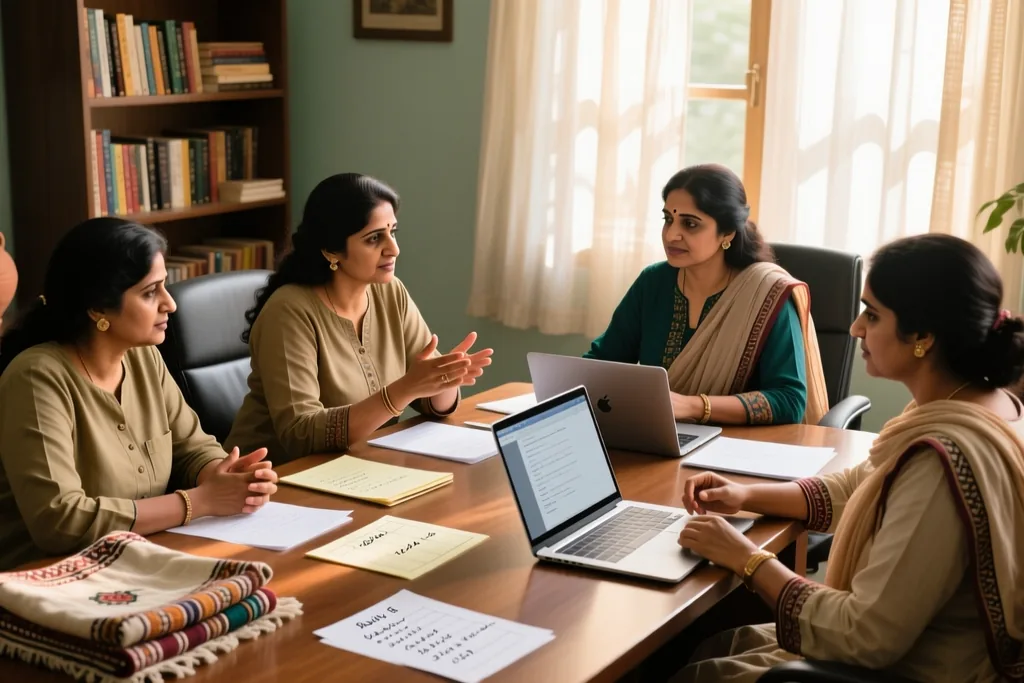
The current emphasis is on making the program easier to join and easier to stay in. Both are practical matters rather than philosophical ones.
Current priorities
Three areas are receiving attention at the moment, each aimed at a difficulty the program has encountered in practice.
- Making the first conversation with new participants clearer and faster.
- Strengthening follow-up after workshops so participants have somewhere to go next.
- Improving support for mentors so they are not left to solve unfamiliar situations alone.
Education and digital skills
On the teaching side, the program continues to pair study skills with practical digital work. The reason is simple: a learner who can read carefully and take useful notes learns technology faster, and a learner who is comfortable with technology can study more independently. The two reinforce each other.
Participants are encouraged to bring real tasks to sessions, such as an assignment they are writing or an application they are preparing, so that practice is attached to something that matters.
Mentoring
Mentoring remains the part of the program that participants most often describe as decisive. The work here is on preparation and support rather than on changing the format, because a reliable conversation is already the right format.
Priorities at a glance
The table below summarises the current focus areas and the outcome each is intended to produce.
| Priority | Problem addressed | Intended outcome |
|---|---|---|
| Clearer joining | Uncertainty at the start | Faster, easier enrolment |
| Better follow-up | Workshops that lead nowhere | A pathway after each event |
| Mentor support | Uncertainty in the role | Confident, reliable mentors |
| Practical teaching | Abstract skills | Skills used on real tasks |
| Community | Isolated learners | A group that stays connected |
What participants can do
Participants can help the program improve simply by saying what is working and what is not. A short message about a session that did not land, a workshop that needed more practice time or a mentoring pairing that needs adjusting is more valuable than a compliment.
Those messages shape the next round of sessions far more than any planning done in advance, because they come from the people actually using the program.
What is not changing
Some things will stay as they are. The program will continue to describe itself honestly, to avoid promises about outcomes it cannot control and to publish only information it can verify. Those commitments are not temporary.
The program will also continue to treat participants as the authors of their own plans, offering guidance without deciding on anyone's behalf what she should study or how she should live.
How decisions are made
Changes to the program come from practice rather than planning alone. When several participants struggle with the same thing, or several mentors raise the same uncertainty, that pattern becomes the next thing the team works on.
This is slower than announcing a strategy, and it keeps the program attached to what is actually happening in sessions. The result is a set of small, practical improvements rather than occasional large reorganisations.
Participants, mentors and volunteers all contribute to that process simply by saying what they notice, which is why feedback is treated as part of the work rather than a courtesy.
The program is in a steady phase of improvement rather than transformation: clearer joining, better follow-up, stronger mentor support and teaching that stays practical. Participants remain the best source of information about what needs fixing, and the team continues to welcome their honest feedback.
Read next
Enrolment news: preparing for the next intake
What applicants can do now, before registration opens.
Mentor training: what changed this cycle
A short update on how mentors are prepared and supported.