
How the program works, step by step

Understanding how the program works makes it easier to decide whether to join and what to expect once you do. The process is not complicated, but it is structured, and each stage has a purpose. This page walks through the whole route from a first enquiry to the point where a participant is studying regularly with the support of a mentor and a community.
Stage one: getting in touch
The program begins with a message. A prospective participant writes to the team, says what she would like to study or learn, and mentions anything that might affect her availability, such as work, study or family responsibilities. There is no test to pass and no formal application fee described by the team at this stage.
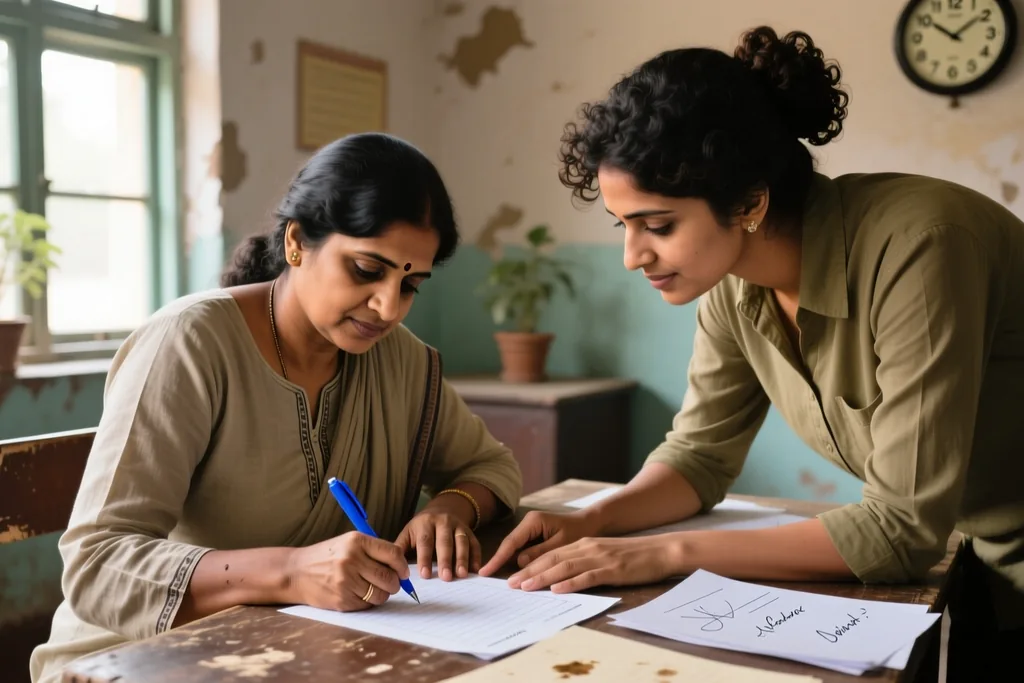
The purpose of this first contact is not to filter people out. It is to gather enough information to suggest a sensible pathway, and to answer questions honestly before anyone invests time.
Stage two: the conversation
A short conversation follows, usually by email and sometimes by phone. The team asks about goals, previous study and the hours a participant can realistically commit each week. Being honest here saves time later, because a plan built on unrealistic availability tends to collapse within a few weeks.
By the end of the conversation, both sides should understand what the participant is aiming for and which sessions or workshops are open to her.
Stage three: joining sessions
Participants then join group sessions. These combine study skills with digital practice, and they are designed to be useful even for someone who has not studied formally for a long time. Regular attendance matters more than intensity: a steady hour each week produces more progress than an occasional long session.
- Come with questions, even small ones.
- Take notes you can actually read later.
- Practise between sessions, even briefly.
- Tell the team when a session clashed with something important.
- Ask for help early rather than after falling behind.
Stage four: mentoring
Alongside the group sessions, participants are matched with a mentor for regular conversations. A mentor is not a substitute teacher. The role is to be reliable, to listen and to help a participant think through problems that do not have an obvious answer in a textbook, such as choosing between two courses or recovering after a difficult exam.
Stage five: direction and next steps
As a participant progresses, the focus shifts from skills to direction. The program helps her map the next steps: a subject to pursue, a course to apply for, a portfolio to build or a work opportunity to investigate. The table below summarises what each stage of the program is for.
| Stage | Purpose | Typical action |
|---|---|---|
| Enquiry | Introduce yourself and your goal | Send a message to the team |
| Conversation | Check fit and availability | Discuss hours and interests |
| Sessions | Build study and digital skills | Attend regularly and practise |
| Mentoring | Work through real problems | Meet your mentor regularly |
| Direction | Plan the next step | Choose a course or pathway |
What happens if plans change
Plans change, and the program is built to tolerate that. A participant who needs to pause can step back and return when her circumstances allow. The important thing is to tell the team rather than to disappear, because a short message usually allows the place and the plan to be kept open.
Participants who complete a pathway are not pushed out of the community. Many stay involved as volunteers, as informal helpers for newer learners, or simply as voices that keep the group honest about what works.
A typical week in the program
It helps to picture how the program fits into ordinary life. Most participants combine one group session with private practice and, once mentoring begins, a short conversation with a mentor. The shape is deliberately light, because a plan that demands too much at once is the fastest way to lose a learner who has other responsibilities.
A group session usually opens with a short review of the previous week, moves into a practical topic such as note-taking or online safety, and ends with a task to try before the next meeting. The task matters: skills are built in the space between sessions, not during them.
Private practice can be as short as twenty minutes. What counts is regularity. A participant who practises briefly several times a week will outpace one who attempts a single long session and then stops, and the program is designed around that simple reality.
The program works best when it is treated as a routine rather than an event. Get in touch, have an honest conversation, attend steadily, use your mentor and keep planning the next step. Do that consistently and the structure does the rest, which is exactly what a good program should do.
Read next
About the Sister2Sister Exchange Program
Who we are, why the program exists and what it offers to women and girls.
Our mission: educating the next generation of women leaders
Education first, digital literacy second, independence as the outcome.
Mentors, partners and the community behind the program
The people who teach, guide and keep the program running.